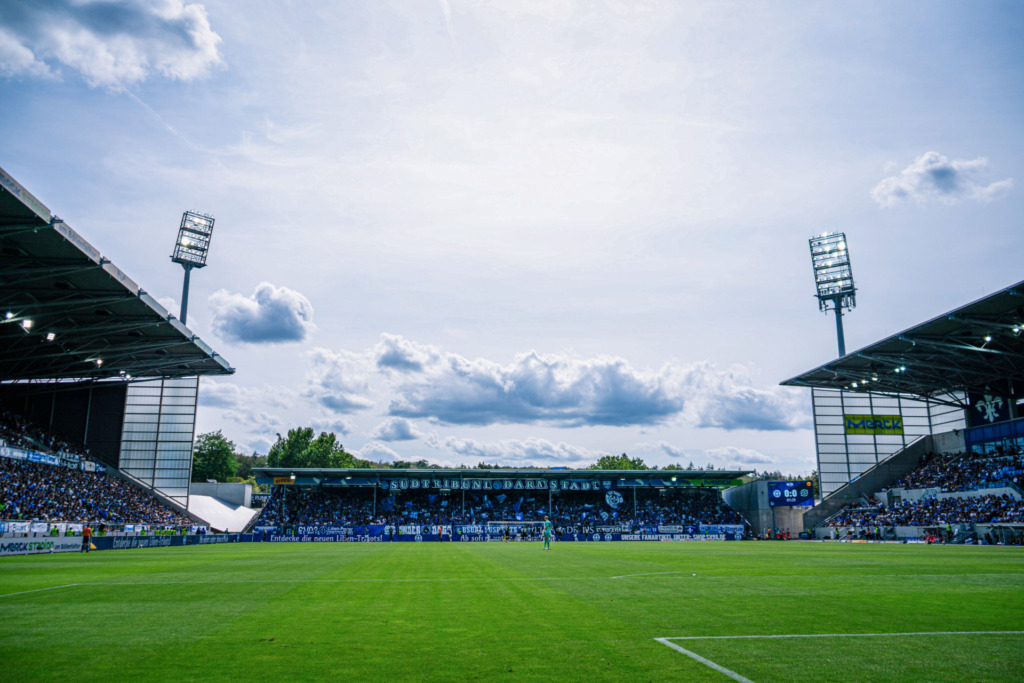
 Fotos: Jana Delp
 31.08.2026 / English
Defeat with Heart
Darmstadt 98 lost to Hannover 96 while playing with ten men and must continue to wait for their first win of this second division season. Read our analysis to find out what positives remain and why Darmstadt 98 had factored in setbacks on their chosen path.
Scene of the Match:
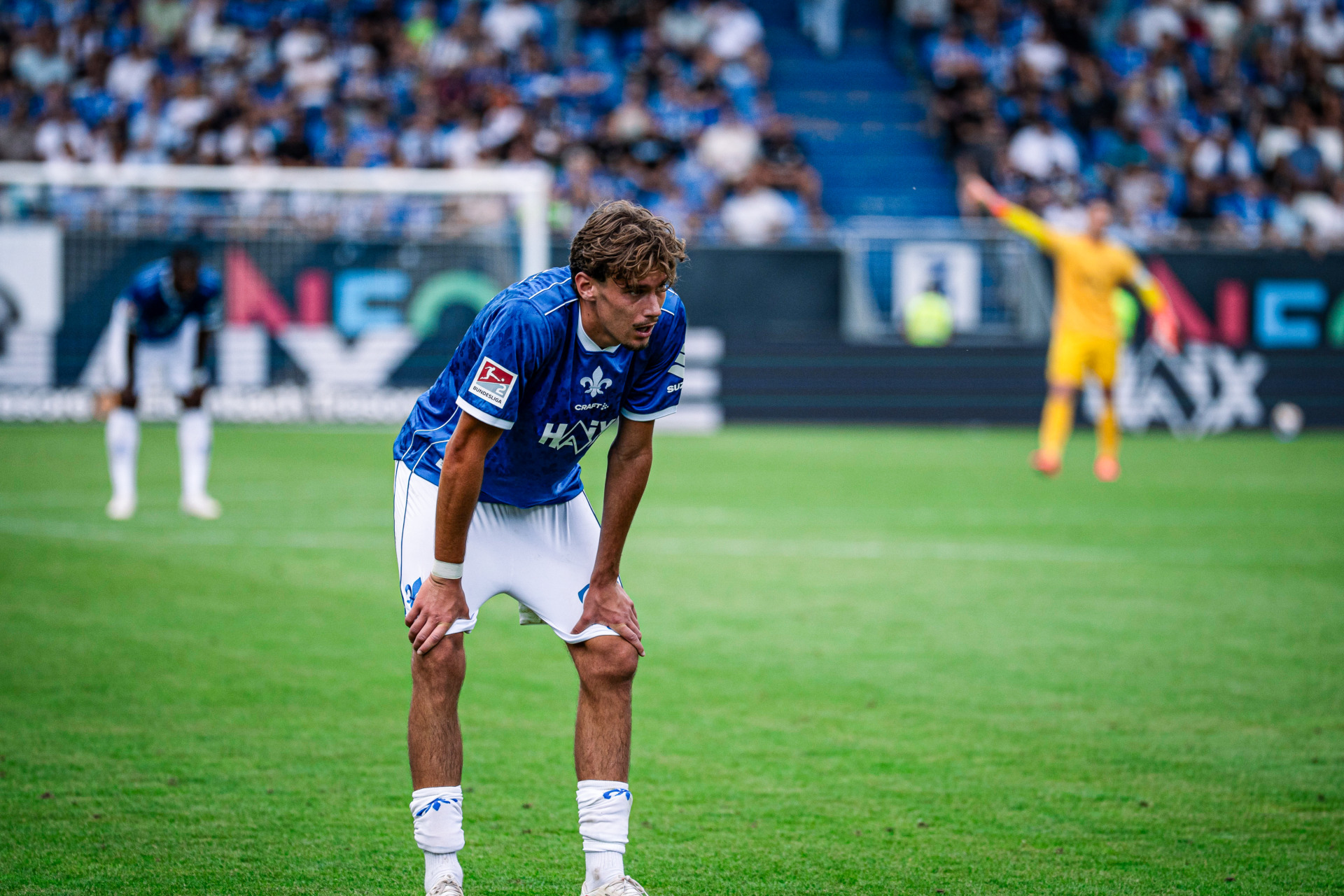
The sending-off in the 20th minute: In the aftermath of the match, a large portion of the questions revolved around the red card shown to Aleksandar Vukotić in the 20th minute. The Serbian centre-back’s handball was clear, and public opinion on the subsequent sending-off ranged from „dubious“ to „harsh“ to „undisputed.“ Florian Kohfeldt saw „arguments for and arguments against the decision“ made by referee Timo Gerach in that situation, which meant Darmstadt had to play with ten men for more than 70 minutes.
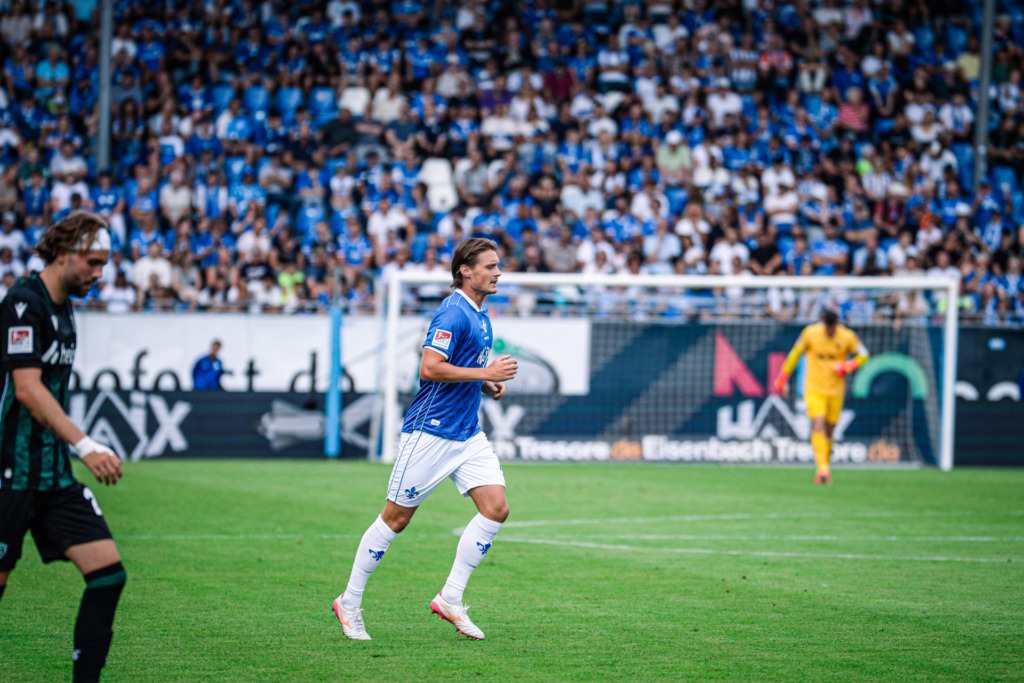
Raoul Petretta wasn’t the only one who later described the incident as „game-changing,“ even though Darmstadt had excellent chances to take the lead while playing with ten men until the halftime whistle. After the break, however, and as the game progressed, the visitors from Hannover increasingly managed to convert their numerical advantage into a degree of dominance and keep Darmstadt away from their goal. Although the depleted South Hessians remained within striking distance in terms of the score until the final whistle, Kohfeldt’s team was unable to truly unsettle the ambitious visitors in the final phase.
This went well:
The mentality: „We’ll take the team spirit and character from today’s game with us.“ Raoul Petretta didn’t have to think long when asked about positive aspects that SV 98 could take away from the defeat. Indeed, it was impressive how the Lilies managed to put up a fight, both in terms of fighting spirit and skill, after the setback of the sending-off, so that Hannover went into the break with a 0-0 scoreline that was, in their view, rather flattering. „I saw a performance with heart,“ explained Paul Fernie, who elaborated: „The lads gave everything, even with ten men. It’s never easy playing with ten men for that long, but they accepted the challenge, and especially in the first half, we were really dangerous.“
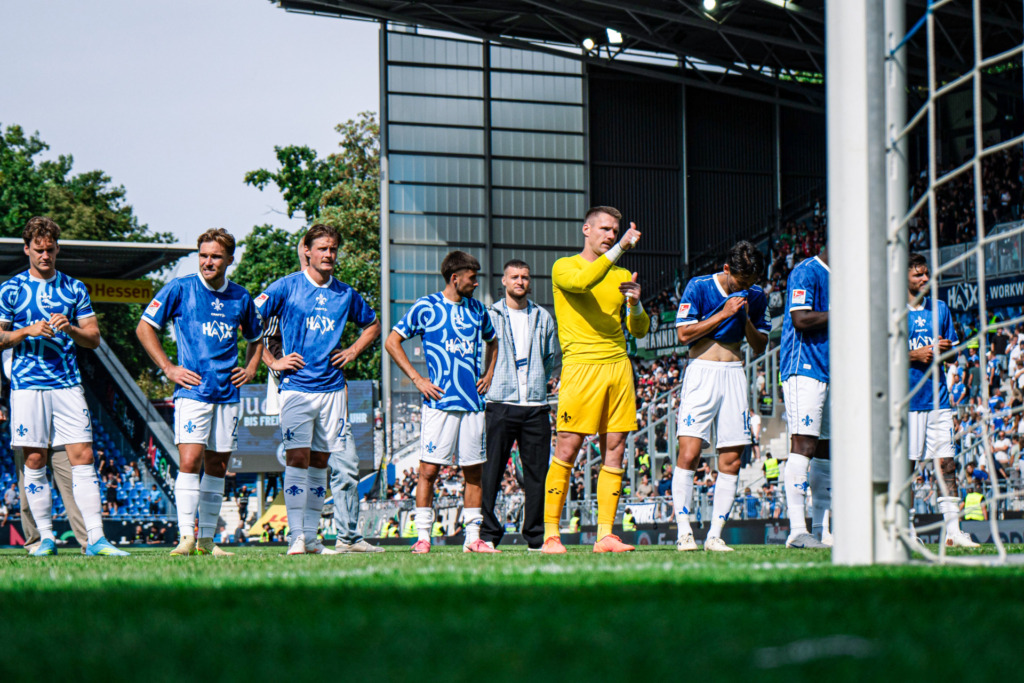
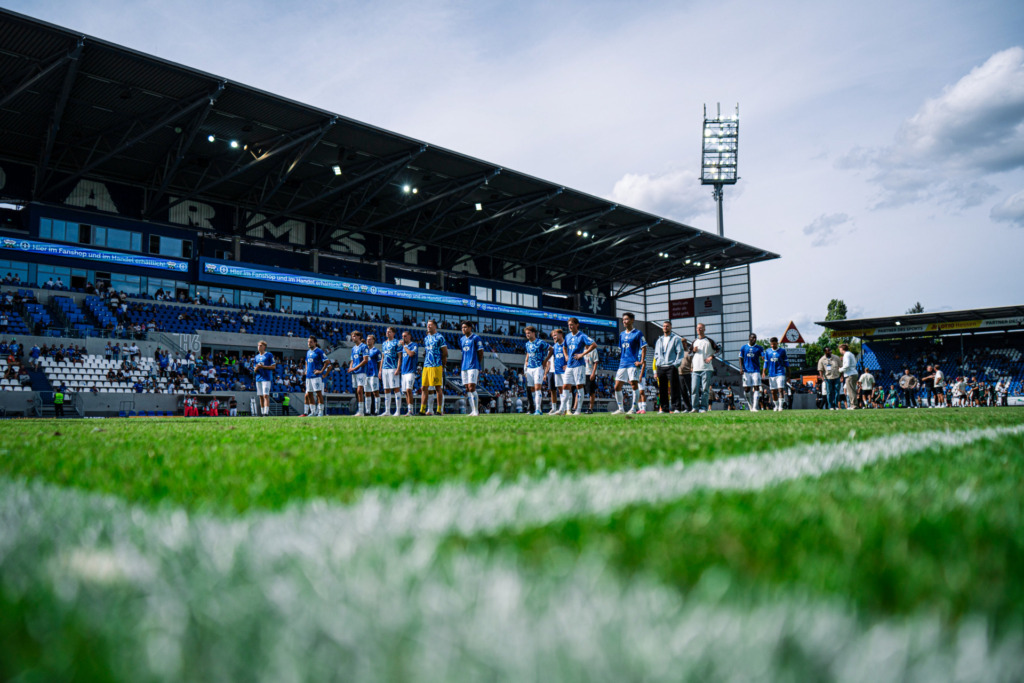
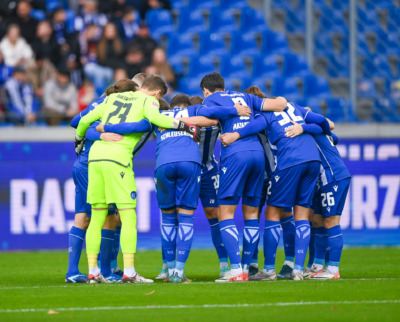
The belief in the chosen path: „We’ve started a new cycle that will take some time.“ The upheaval in the Lilies‘ squad this summer was significant. A topic that has been discussed frequently and yet remains a fact. Of course, everyone who supports Darmstadt 98 wants to see points added to their tally. And naturally, victories would positively influence the team’s integration process and the start of this new cycle. But setbacks are part of such a process, and Darmstadt had factored them in, even though they would have preferred to avoid them. „We believe in this setup and assembled the squad with conviction,“ explained Paul Fernie, echoing Florian Kohfeldt’s sentiments, who also reaffirmed his „belief“ in the team and the chosen path. This same conviction was palpable in the team huddle after the final whistle on Sunday afternoon, evident in the players‘ interviews, and also among the Darmstadt fans in the stadium, who gave the team an encouraging round of applause.
That didn't go well:
The sending-off: The mentality was right, the passion was there, but as in the away game in Dresden, Darmstadt weakened themselves. „Vuko gave the referee the opportunity to show him the red card. As an experienced player, he probably shouldn’t have gone in like that in that situation.“ Darmstadt have already played almost 100 minutes with ten men this season following the dismissals of Klefisch (in Dresden) and Vukotic. A self-inflicted handicap that doesn’t exactly improve their chances of winning. It’s also clear that game scenarios are unpredictable. Vukotic’s handball was instinctive; football is all about decisions made in fractions of a second. Nevertheless, Darmstadt’s focus should now be sharpened. Because it’s much nicer to play a game with an equal number of players. Or perhaps even to have a numerical advantage.
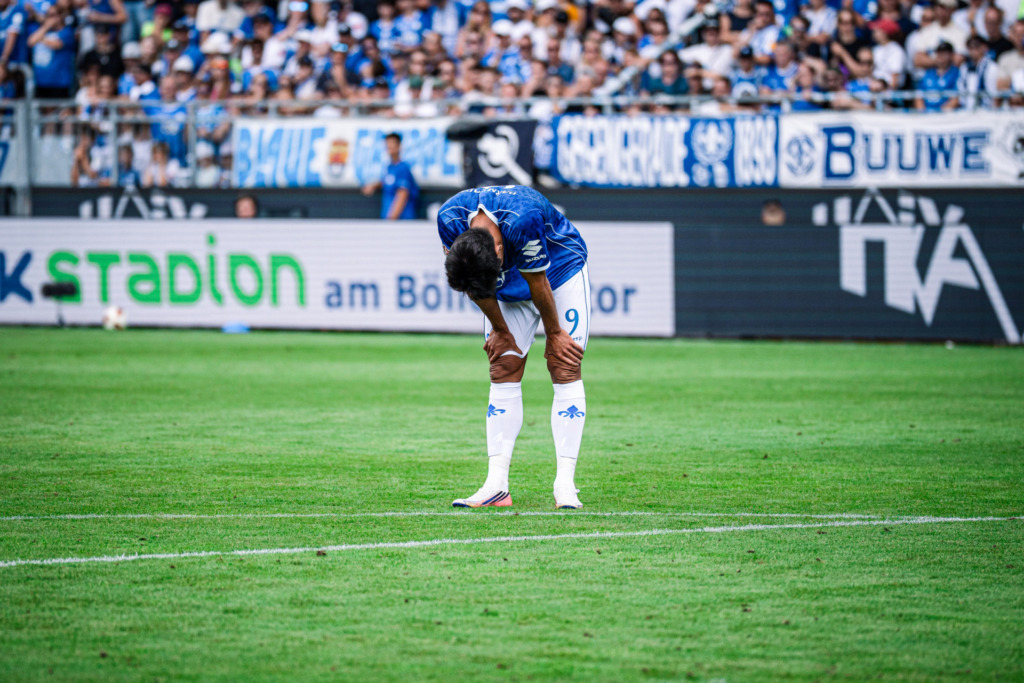
The feeling of defeat: After the game in Jena, we were able to discuss the „feeling of victory“ at length. An emotion that is virtually irreplaceable for any professional athlete. A completely different emotional landscape naturally prevails after a lost match, even if the team can hardly blame itself. „My emotional state isn’t exactly great, because I hate losing,“ Florian Kohfeldt initially described, before making his point quite clear: „Defeats always feel awful.“ And it’s important that this feeling is omnipresent for everyone, even during a period of transition and team building after a loss. Because the hunger for victory is a driving force and ensures that, in the aftermath of a defeat, the feeling of success is craved even more intensely. And so, Marcel Schuhen’s gaze was already fixed on the future again on Sunday afternoon: „One point from three games is obviously not what we want. Nevertheless, I’m really looking forward to Kaiserslautern.“
Fotos: Jana Delp 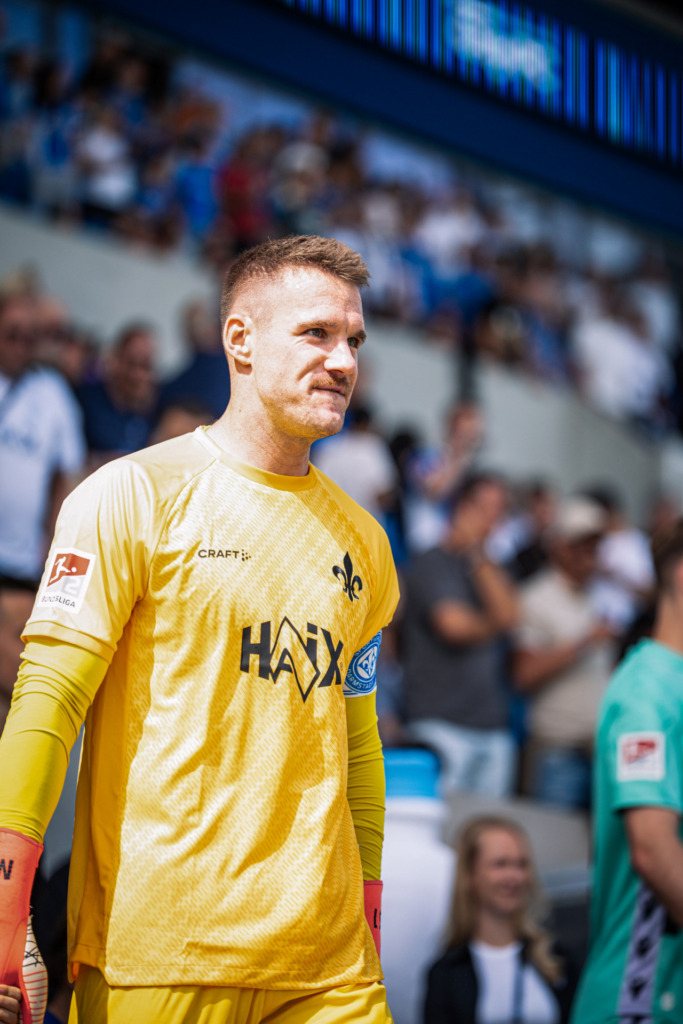
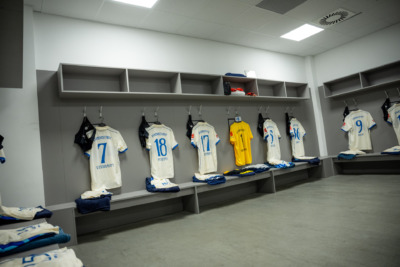
Team News: Two Changes to the Team
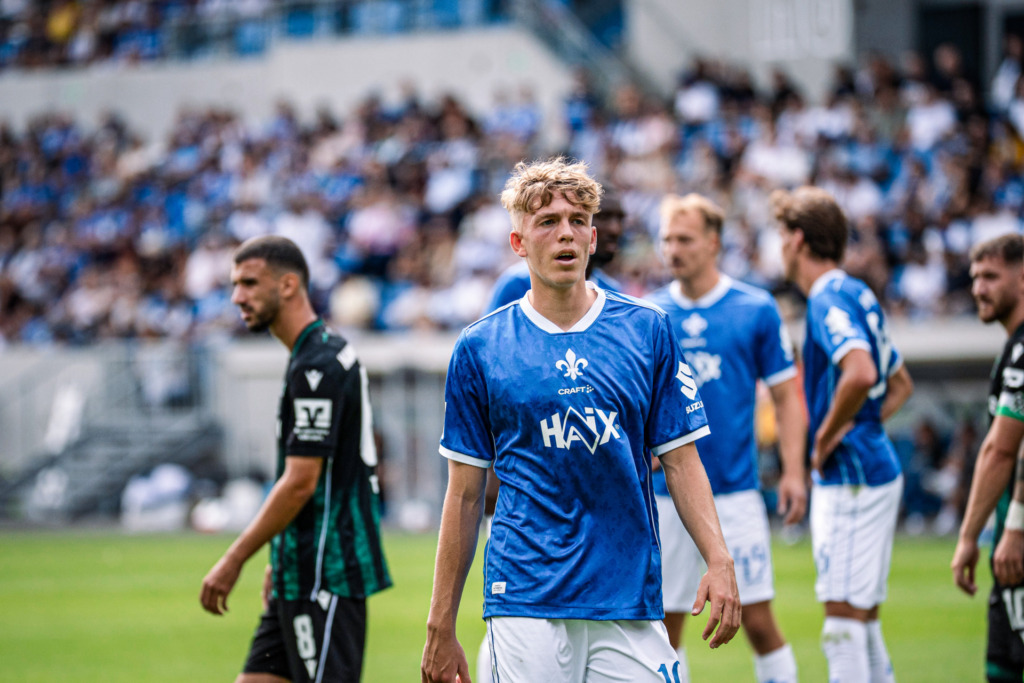
The 8th matchday takes the Lilies to Karlsruhe. Florian Kohfeldt has made two changes to his starting eleven compared to the home win against Cottbus: Lance Duijvestijn and Hiroki Akiyama come in for Noah Weißhaupt and Nicolas Verkooijen. Weißhaupt (on the bench) and Verkooijen (absent from the squad) both missed parts of the week's training due to illness. Additionally, Yosuke Furukawa is sidelined with calf problems.
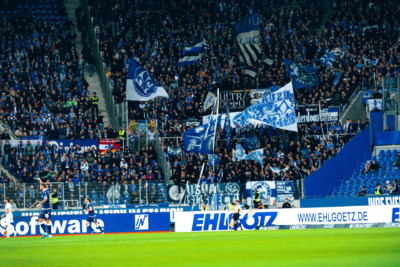
Matchday Guide: All Information for the Karlsruhe Game
On Sunday afternoon (Oct 18th, 1:30pm), SV 98 will visit Karlsruher SC for the 8th matchday of the season. What do the two head coaches have to say ahead of kickoff? Who will be officiating the match, and where can you follow the action live? As always, we’ve put together all the essential information for the game against KSC in our "Matchday Guide" feature.
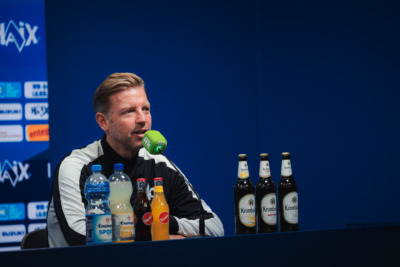
„We want to continue this path in Karlsruhe“
On Sunday, the Lilies face a challenge in Baden: for the 8th matchday, SV Darmstadt 98 travel to take on Karlsruher SC. At the pre-match press conference, our head coach discussed the squad situation, the qualities of the opposition, and the team's motivation to get back to winning ways on the road.
Opposition Check: Karlsruher SC
On Sunday (October 18th), SV Darmstadt 98 will visit Karlsruher SC. KSC has a history that extends well beyond the confines of German football: the club from Baden once caused a stir on the European stage, writing a chapter that is still remembered today. But how did KSC manage to step into the international spotlight, and what made this success so special?
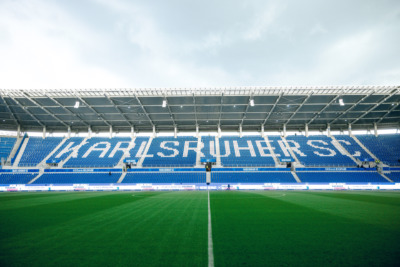
Fan Information for the Karlsruhe Game
The next away match is coming up: this Sunday (October 18th, 1:30pm), the Lilien will visit Karlsruher SC for the 8th matchday of the 2. Bundesliga. As always, you can find all the essential information regarding travel and your visit to the stadium in the fan guidelines.
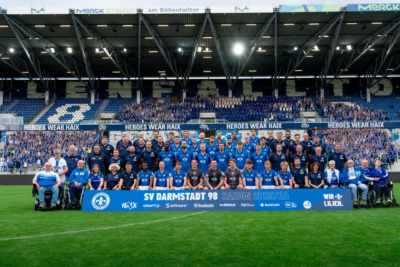
The largest team photo in the history of the Lilien enters its second round
SV Darmstadt 98 invites all its members to come to the Merck-Stadion am Böllenfalltor on November 1st, 2026, starting at 11:30am. Together, we aim to once again create the largest team photo in our club’s history—with the professional players in the front and the entire Lilies family behind them.
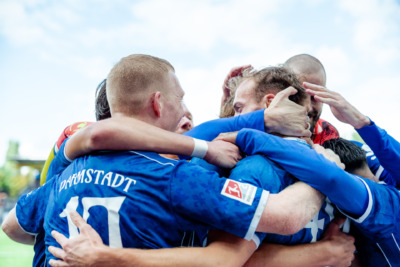
Facts & Figures: The Top Facts before the Karlsruhe Game
On Sunday (Oct 18th), SV Darmstadt 98 will visit Karlsruher SC. The side from Baden differs from the Lilies in several key respects. Furthermore, the match will see SV 98 cross paths with a former player once again. Find out here about other connections between the two clubs, as well as some particularly interesting statistics ahead of the encounter.
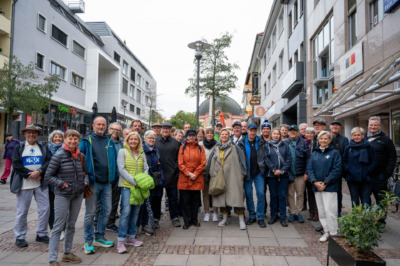
Stolperstein tour commemorates Jewish club members
On Tuesday evening (October 13th), the SilberLilien took part in SV Darmstadt 98’s Stolperstein tour for the first time. Along the approximately six-kilometre route, the participants made several stops to learn more about the fates of Jewish club members who were persecuted and driven out during the Holocaust.
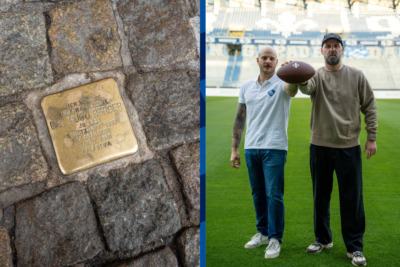
New breadth for the future and commemorating the past
From new grassroots sports offerings and a look back at the club's history to birthdays and the latest updates from the media briefing—there is plenty to report from SV Darmstadt 98 again this week. In "Lilien Across the Board," we round up the news, insights, and stories from life at the club.
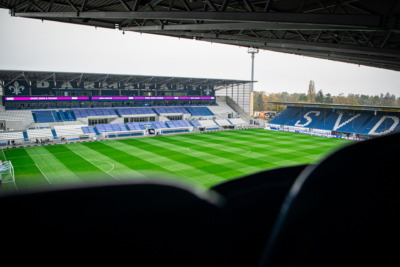
Secure your tickets now: Home match against 1. FC Heidenheim on general sale.
Tickets for the home match against 1. FC Heidenheim on November 22nd are available for purchase now.
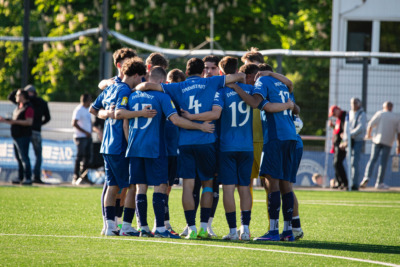
Well-deserved victory for the Young Lilies
SV Darmstadt 98's U21 team proved their mettle at home against KSV Hessen Kassel II in the Hessenliga on Sunday (Oct. 11th). After a convincing 90-minute performance, the Young Lilies secured another three points, finishing with a decisive 4–0 victory that lifts them to sixth place in the standings.
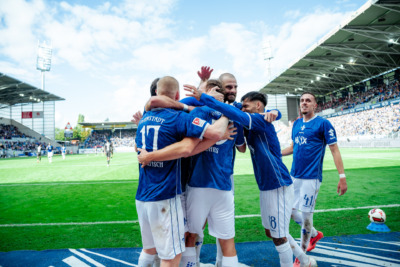
With the right mindset and positive development
The Lilies overturned an early deficit to celebrate a 3–1 home victory against Energie Cottbus—a win that boosts confidence and confirms the progress being made. Read our analysis to find out why there is still work to be done and what positives SV 98 takes away from the match.