Contract Extended: Nürnberger stays in Darmstadt
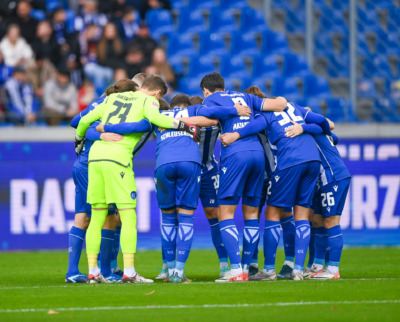
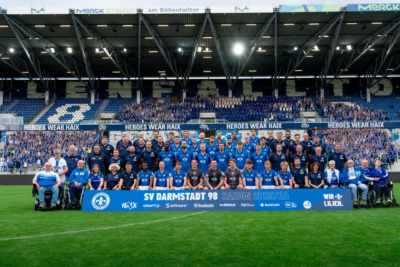
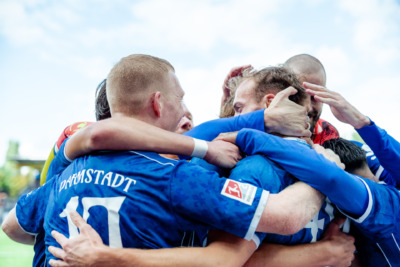
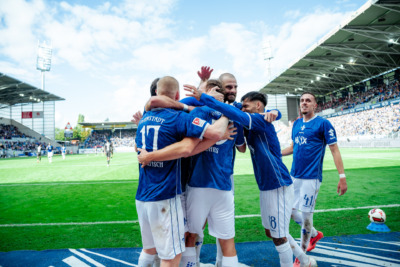
SV 98 can continue to rely on the services of Fabian Nürnberger. The Lilies have extended the expiring contract with the Bulgarian international.
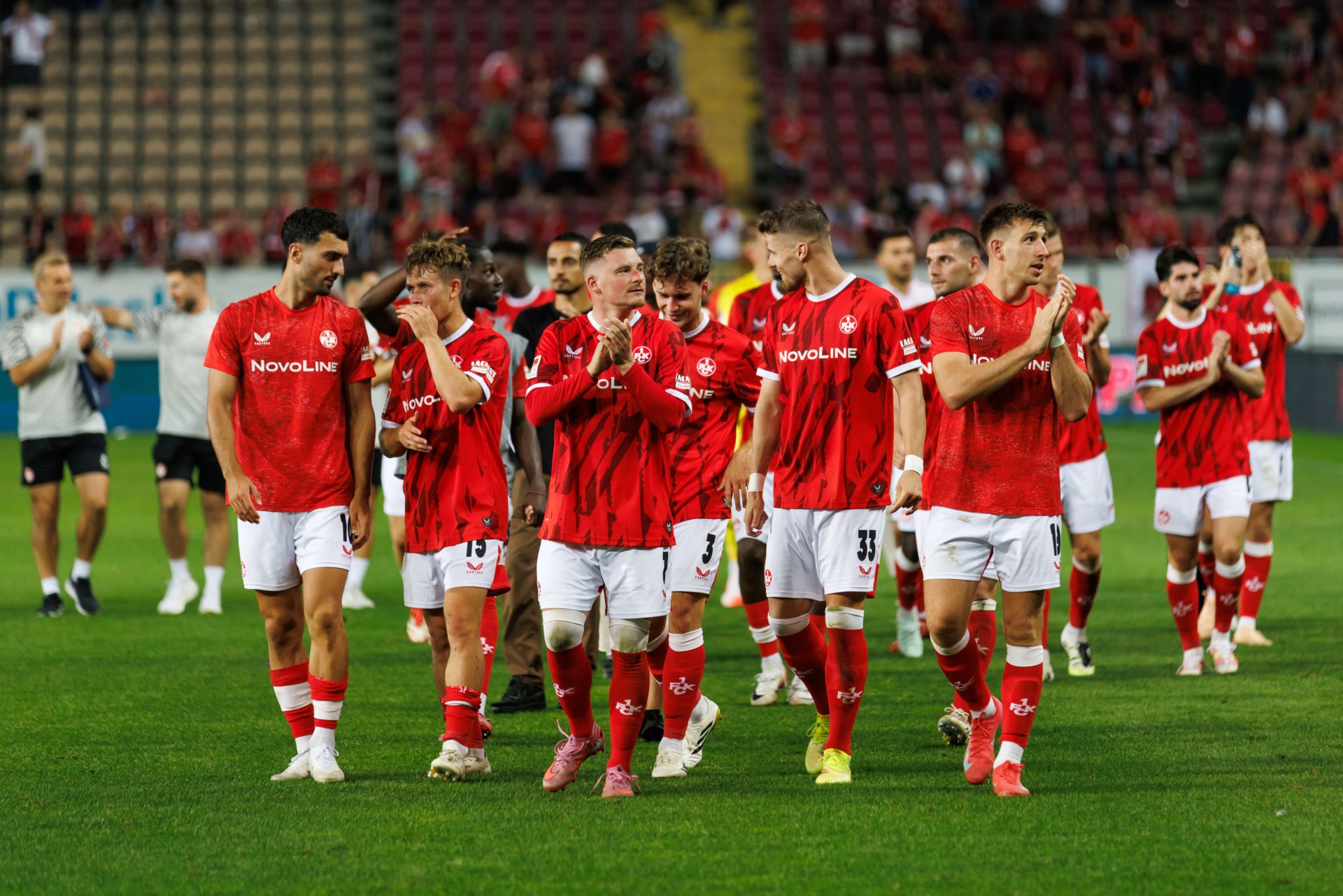
Why are the players of 1. FC Kaiserslautern called the "Red Devils"? Have the Palatinate team perhaps made a devilish pact? Or is it because the Fritz Walter Stadium is figuratively ablaze when the stands shake and the atmosphere is at its peak? The truth is less mystical, but all the more steeped in tradition: The nickname has historical roots closely linked to club legend Fritz Walter.
During World War II, Walter played for the „Red Hunters“ team. This formative experience later inspired him to introduce red as the dominant jersey colour for FC Kaiserslautern. Previously, the Kaiserslautern team had been known for wearing white shirts and white shorts. However, the striking red jerseys quickly caught on – and soon, the team, sporting red jerseys, was spreading fear and terror across the country. The term „Red Devils“ first established itself over 50 years ago in the sports sections of southwest German newspapers like the „Rheinpfalz.“ From there, thanks in part to the fame of the brothers Fritz and Ottmar Walter, it made headlines across the country – and became the trademark of 1. FC Kaiserslautern.
The club has been an integral part of the German football landscape for 125 years. The „Red Devils“ experienced their greatest triumphs with the German championships in 1951 and 1953, as well as the DFB Cup victories in 1990 and 1996. The 1996 success was tragic: While they were lifting the cup to the sky, the club was simultaneously forced to face the bitter relegation to the 2. Bundesliga. After occasionally making it to the German top flight, their last Bundesliga season was 14 years ago. We’ve taken a closer look at the Lilies‘ opponent next Sunday (August 31st at 1:30pm).
| Top Transfers | Top Departures |
| Naatan Skyttä (Midfielder, from USL Dunkerque) | Ragnar Ache (Forward, to 1. FC Köln) |
| Semih Sahin (Midfielder, from SV Elversberg) | Filip Kaloc (Midfielder, to Ludogorets) |
| Ivan Prtajin (Forward, from Union Berlin) | Aaron Opoku (Midfielder, to Kayserispor) |
| Ji-soo Kim (Defender, from FC Brentford) | Jan Gyamerah (Defender, to SV Elversberg) |
| Fabian Kunze (Midfielder, from Hannover 96) | Daisuke Yokota (Midfielder, End of Loan to KAA Gent) |
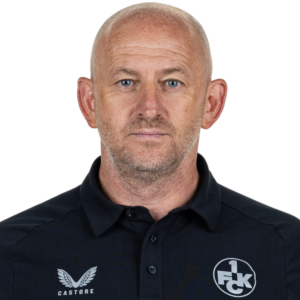
Torsten Lieberknecht
Head coach at 1. FC KaiserslauternInterestingly, Torsten Lieberknecht served as head coach of the Lilies for over three years between 2021 and 2024, helping the South Hesse side achieve promotion to the Bundesliga in the 2022/23 season. Following his resignation in November 2024, Florian Kohfeldt took over as coach of SV Darmstadt 98.
In this still-young second-division season, the Palatinate team is currently the king of the skies. With 85 aerial duels won, they rank first in the 2. Bundesliga in this category. FC Schalke 04 ranks second with 77 aerial duels won, followed by Dynamo Dresden (72).
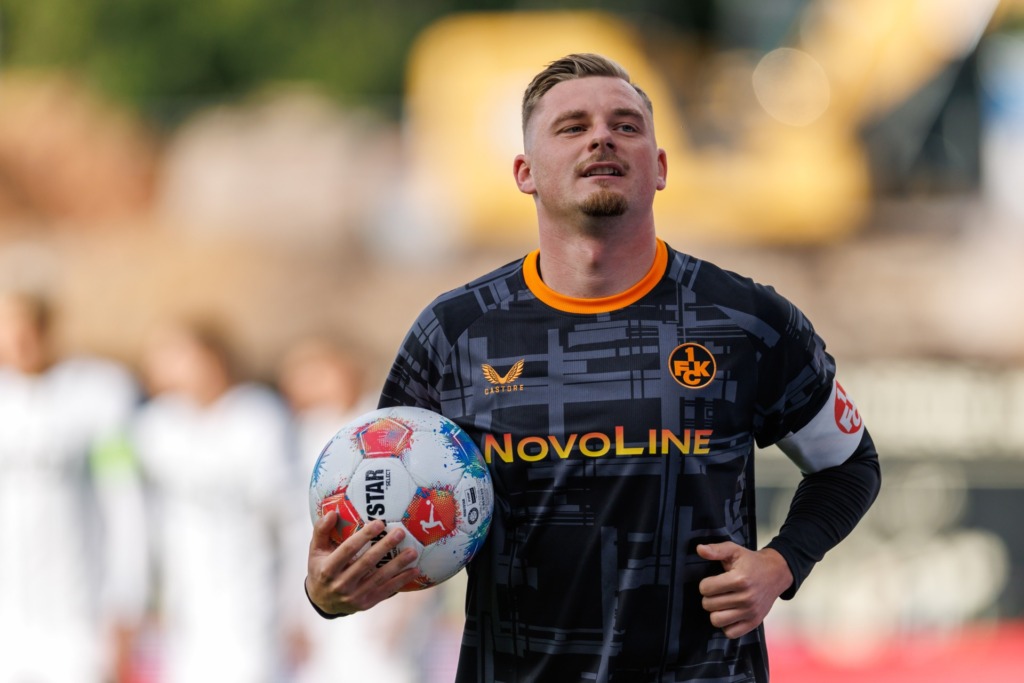
It’s midsummer, 30 degrees in the shade, and drinking breaks have long been standard practice in professional football. All the players are trying to cool down somehow, and no one would even dream of wearing a long-sleeved shirt under their jersey – except for one person: Marlon Ritter. The 1. FC Kaiserslautern midfielder always wears a long-sleeved shirt under his jersey, even on hot days. But this is neither a matter of fashion nor superstition. The Essen native suffers from a grass allergy – an irony of fate for a professional footballer. „The grass allergy doesn’t really affect me at all. The only thing is that I’ve been training in a long-sleeved shirt for what feels like ten years. And in the summer, I don’t lie on the grass at the outdoor pool,“ Ritter explained in an interview with Magenta Sport in 2021.
Ritter’s path to professional football was almost predetermined. Growing up in the football city of Essen, he started at SpVg Schonnebeck. At just seven years old, he moved to FC Schalke 04. But in his teens, at 15, his career seemed to stall: Ritter lost interest in football, retired, and devoted himself to handball instead. The break didn’t last long, however. The joy of football returned, and Ritter made a fresh start in Essen.
His path led him via Rot-Weiss Essen to Borussia Mönchengladbach, where he trained with the professionals for the first time – under none other than Lucien Favre. „My time at Gladbach was unforgettable for me. Back then, the club was always playing in the Champions League and at the top of the Bundesliga. It was a lot of fun, but looking back, I wish I had been more eager to get on the pitch,“ Ritter recalls. After Gladbach, he played for Fortuna Düsseldorf and SC Paderborn. With the East Westphalian club, he once marched from the 3rd division all the way to the Bundesliga.
In 2020, Ritter moved to 1. FC Kaiserslautern – a brilliant move. In five years, he made 176 appearances for the „Red Devils,“ scoring 33 goals and providing 26 assists. Last season, he appeared in 30 second-division matches. His combative nature, willingness to take on any challenge, and his presence on the field make him particularly popular with the fans. Ritter embodies what is known at Betzenberg as the „true Betze feeling.“ That’s why head coach Torsten Lieberknecht continues to rely on Marlon Ritter as captain of the Palatinate club: „I already got to know Marlon last year as captain. He’s someone who has shaped FCK with his sporting achievements. I’m also convinced that I can teach him things that will make him an even better captain.“ Whether he wears a long-sleeved shirt or not is ultimately irrelevant. For the fans of 1. FC Kaiserslautern, the most important thing is that their captain gives his all on the pitch.