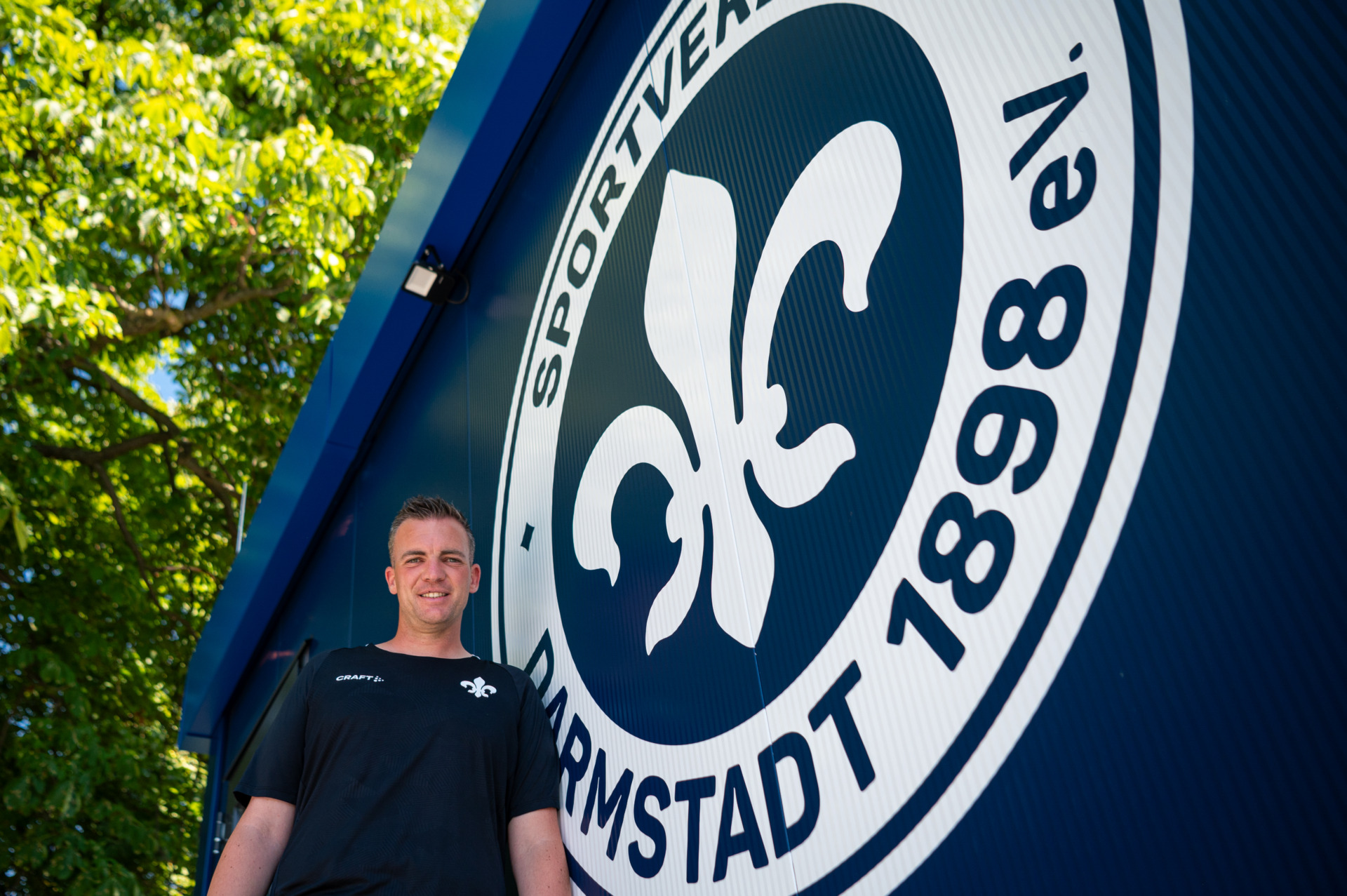
SV 98: Patrick, you’ve been with the Lilies since 2016. How did your journey at SV 98 begin back then?
Patrick Kurt: The decisive moment came with a phone call from Björn Kopper. At the time, I was coaching the U15s at my hometown club. Björn had taken notice of me and got in touch. Things moved quickly after that: we met up, the conversations felt right, and shortly afterwards, I took charge of the U11s.
Since then, you’ve coached numerous age groups in the youth setup. How has your approach to coaching evolved over the years?
You develop as a coach when working with different age groups—both in terms of how you communicate and the content of the training sessions. It was incredibly helpful for me to work with so many different age levels. It means I can say today that I learned the coaching profession from the ground up, rather than just suddenly stepping into the role of a U21 coach.
This summer, you and Sebastian Schmitt swapped teams: you moved from the U19s to the U21s, and Sebastian went the other way. How did that decision come about?
The decision was made quite early on. It was already settled in February that I would take over the U21s starting in the summer. However, we decided together that Sebastian would finish the season with the U21s and I would finish with the U19s. That allowed us to make a clean break in the summer and start fresh with our new teams.
At the same time, that early decision gave me the chance to get an overview of the U21 squad as it stood then and to work with Max Mehring and Sebastian on planning the roster for the new season. It was a challenging process, too, because we were planning across the teams: I was primarily responsible for the U21s, while Sebastian handled the U19s.
Sounds demanding…
But it brought us even closer together. We were in touch by phone countless times every day and had to coordinate constantly. That also highlights one of our greatest strengths: we are a small team that works together based on a high level of trust. No one tries to go it alone. We coordinate closely and always make decisions with the players‘ best interests in mind.
The U21 team is intended to facilitate the transition from youth football to the senior level—and ideally to professional football. What new demands do the players face?
We noticed right from the first training sessions and friendly matches that the dynamic at the U21 level is completely different. The speed of play, intensity, and physicality in challenges are significantly higher. This environment is a huge help, especially for the very young players we brought up from the U19s—or those who would even still be eligible to play for the U19s. It allows them to gradually get used to the higher level.
That is precisely why the Hessenliga is a good platform for us. It gives us the opportunity to field very young players in senior-level competition. So far, we feel the lads are holding their own very well. Of course, it is particularly valuable when the players have contact with the professional squad. In recent weeks, four or five of our lads have regularly taken part in training sessions with the second-division team. And when we subsequently receive feedback that they are doing a good job and showing the right attitude and mindset toward training and preparation, that is the greatest validation and reward for our work.